

Menu
Back
Back to news
Philipp Lorenz-Spreen appointed Professor of Computational Social Science at TUD
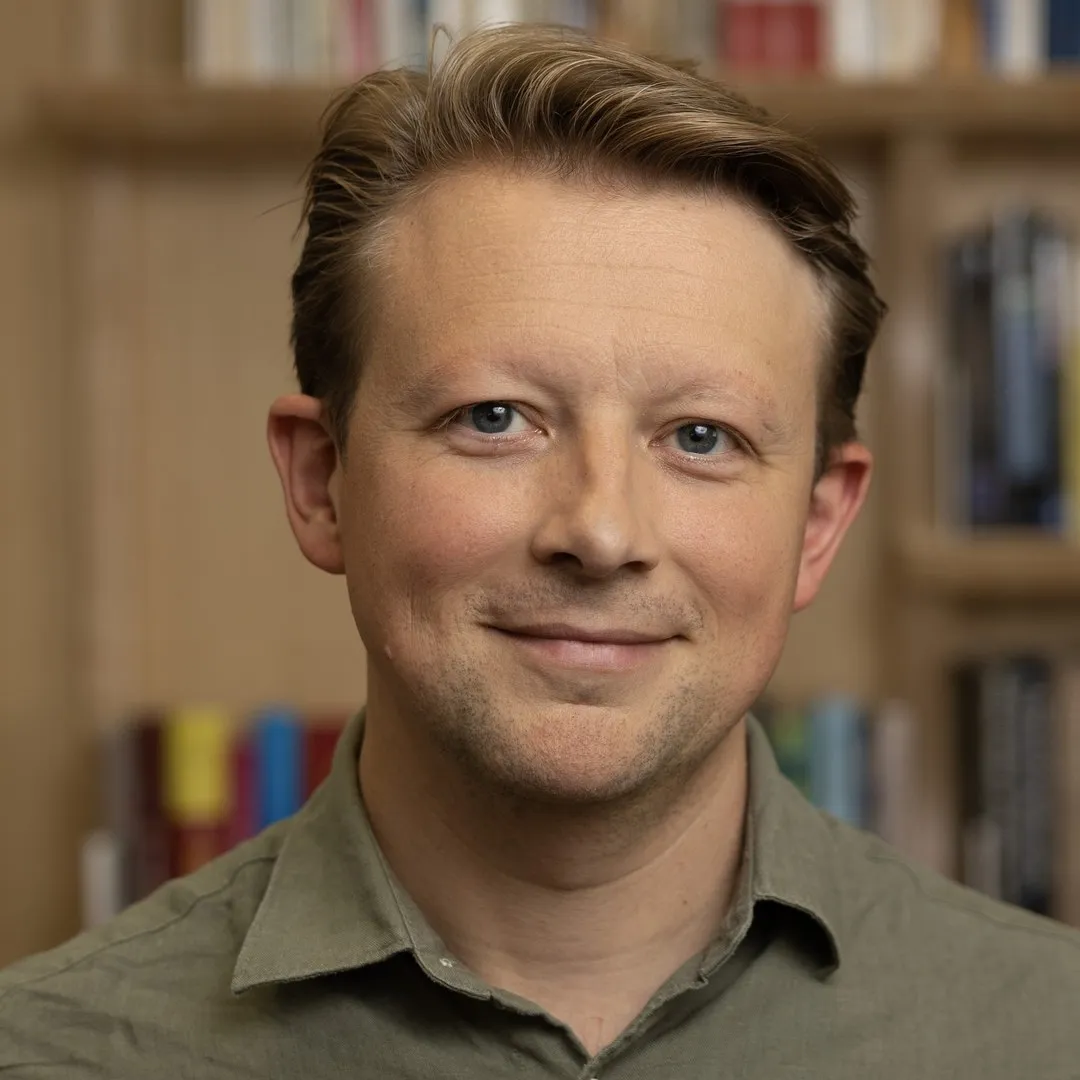
We are happy to share that our colleague Philipp Lorenz-Spreen was appointed Professor of Computational Social Science at TUD on August 25, 2026. He will officially take up his new position on September 1. The professorship is jointly based at the Institute of Media and Communication within the Faculty of Arts, Humanities and Social Science and here with us at SynoSys.
Philipp’s appointment further strengthens Computational Social Science as one of our core research areas. At SynoSys, we look at complex phenomena from a systems centered perspective. In Computational Social Science, this means studying digital society as a complex system shaped by the interactions between individuals, social networks, digital platforms and algorithmic systems.
Philipp’s research focuses on the societal impact of digital media and online platforms. He investigates how digitalization affects political discourse, opinion dynamics, polarization, attention and collective behavior. By combining computational methods with a complex systems perspective, he aims to understand how individual behavior and interactions give rise to collective social dynamics.
“We want to understand how digitalization is systematically transforming our society, how algorithms, platforms and generative AI influence public opinion and democracy, and how we can actively contribute to shaping these developments. To do this, we use the tools that digitalization itself provides, including online experiments, computational methods and the data trails it leaves behind,” says Philipp.
Computational Social Science is part of our broader effort to understand complex, networked and adaptive systems across disciplinary boundaries. Together with our research in areas such as digital health, computational epidemiology and computational biodiversity, it shares a common focus on interactions, networks and emergent dynamics. Philipp’s professorship gives this research area an even stronger foundation and opens up new opportunities for collaboration within our team and throughout TUD.
The joint affiliation with the Institute of Media and Communication is an important part of this. It connects our complex systems perspective with communication research and the wider social sciences and creates opportunities for exchange in both research and teaching.